

-
 Turing's Tyger. L Mahadevan. Visualizing Climate and Loss, 23 Mar 2026.
[View PDF] [Download PDF] In "Turing's Tyger," mathematician L. Mahadevan reflects on the collapse of wild tiger populations (from ~100,000 in 1900 to ~3,000 by 2000, rebounding modestly to ~6,000 today, versus ~9,000 in unregulated captivity) and his personal quest to understand the origins of tiger stripe patterns. Drawing on a visit to the Natural History Museum in London - where he photographed preserved tiger skins for statistical analysis of stripe patterns — and a first-ever wild tiger sighting at Kanha National Park in January 2026, he connects this fascination to Alan Turing's 1952 theory of morphogenesis (reaction-diffusion patterns), asking whether such models could explain how stripes form and vary across individuals, generations, and evolutionary time. The essay closes on a conservation note, framing the scientific inquiry as a path toward deeper understanding and protection of the species. -
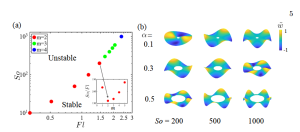 Elastohydrodynamic instability of a spinning elastic disk. S Yin, P Kaneelil, L Mahadevan. arXiv, 21 Jul 2026.
[ONLINE ARTICLE] [DOI] [View PDF] [Download PDF] A soft thin elastic disk spinning in a viscous fluid experiences centrifugal tension generated by rotation together with viscous shear generated by the surrounding flow. While the former stabilizes the flat state, the latter can destabilize it. We combine the linearized F\"{o}ppl-von K\'{a}rm\'{a}n equations for a rotating elastic disk with the shear stresses arising from the classical von K\'{a}rm\'{a}n swirling flow to derive an elastohydrodynamic stability problem. Linear stability analysis identifies the onset of buckling in terms of two dimensionless control parameters measuring centrifugal stiffening and fluid-induced shear. Above threshold the disk buckles into azimuthally periodic saddle-like modes whose wavenumber increases with increasing rotational tension. The buckled configuration also supports retrograde traveling waves that rotate more slowly than the material frame. These results identify a simple mechanism whereby fluid shear destabilizes rotating elastic structures. -
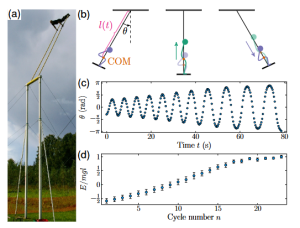 Optimal strategies for kiiking: active pumping to invert a swing. P Bryde, I Davenport, L Mahadevan. Journal of Nonlinear Science, 15 Jul 2026.
[ONLINE ARTICLE] [View PDF] [Download PDF] Kiiking is an extreme sport in which athletes alternate between standing and squatting to pump a swing with rigid supporting arms until it completes a full rotation. A minimal model of the task may be cast in terms of an active pendulum driven by varying its length, and raises the question of optimal strategies for this problem at the nexus of physics and control. We show that a time-optimal control perspective, subject to known biomechanical constraints which aims to maximize the potential energy gain at the end of each cycle explains observations of athletic performance. When accounting for air drag, our theoretical framework is quantitatively consistent with experimental observations and elucidates the importance of strength and timing while pointing to the ultimate limits of kiiking. -
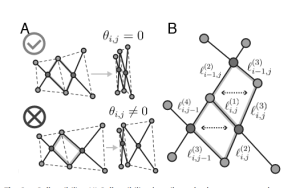 Collapsible scissored surfaces. N Toyonaga, S Nishimoto, C Decker, T Tachi, R Wood, L Mahadevan. Proceedings of the National Academy of Sciences, USA, 18 Jun 2026.
[ONLINE ARTICLE] [DOI] [View PDF] [Download PDF] We introduce an additive approach for the design of a class of transformable structures based on two-bar linkages (“scissor mechanisms”) joined at vertices to form a two-dimensional mesh which we call a pantograph lattice. Our approach shows how these lattices unfold from a one-dimensional collapsed state to two-dimensional surfaces of single and double curvature. We provide an algorithm for growing pantograph structures that allows us to explore the full space of possible mechanisms, and we use it to computationally design and physically assemble a series of examples of varying complexity. We finally demonstrate a streamlined method for automated fabrication of pantograph lattices using multimaterial 3D printing. -
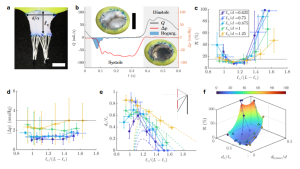 Parametric engineering of atrioventricular living valve transplants. PR Kaneelil, KJ Hon, DP Recco, N Thatte, G Dafflisio, PE Hammer, L Mahadevan, S Emani. arXiv, 18 Jun 2026.
[ONLINE ARTICLE] [DOI] [View PDF] [Download PDF] Diseases of the (mitral and tricuspid) atrioventricular valves (AVV), which regulate inflow from the atria to the ventricles, can result in severe obstruction to inflow (stenosis) or valvular leakage (regurgitation), requiring surgical intervention. In patients with small annulus diameters (< 19 mm), valve replacement is a clinical challenge limited by prosthesis size constraints, lack of growth potential, suboptimal durability, and elevated thrombosis and bleeding risk. While living valve transplantation (LVT) has re-opened the possibility of using allogeneic valve tissue capable of growth and remodeling, translating this to the AVV has been challenging given the anatomical complexity of the sub-valvular apparatus. Here, we propose a strategy using a replacement bi-leaflet cylindrical valve fabricated from donor AVV tissue and artificial chordae, with a geometry designed to mimic the native AVV and engineered to satisfy predefined clinical targets. Pulse duplicator experiments allowed characterization of valve dynamics in terms of clinically important attributes framed as dimensionless parameters. A multi-objective optimization allowed us to identify an optimal design which we implemented in porcine AVV replacements (n=6). Our results demonstrated favorable hemodynamics with minimal regurgitation and stenosis, suggesting a promising method for patient-optimized valve replacements. -
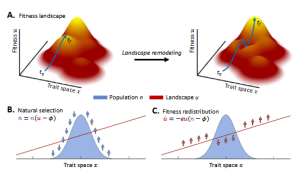 Self-propelled evolution on regenerating landscapes. A Heyde, L Mahadevan. arXiv, 14 Jun 2026.
[ONLINE ARTICLE] [DOI] [View PDF] [Download PDF] Evolving populations both respond to and reshape their environments, making fitness landscapes dynamic rather than static. We present a minimal eco-evolutionary model that couples replicator dynamics for a population density with a regenerating resource-driven landscape through a single environmental sensitivity parameter. This allows evolving populations to generate and ride self-induced selection gradients, enabling directed motion in trait space even on initially flat landscapes. Our analysis reveals sustained oscillations, chaotic dynamics, and evolutionary branching. To explain these, we derive reduced dynamical equation that extend Fisher's fundamental theorem to deformable landscapes by incorporating curvature-driven variance dynamics and environmental feedback. Together, these results show how populations actively reshape and self-propel themselves on regenerating landscapes. -
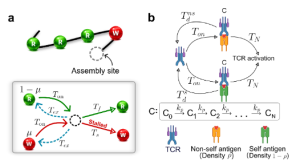 When proofreading improves both speed and accuracy. A Biswas, L Mahadevan. arXiv, 10 Jun 2026.
[ONLINE ARTICLE] [DOI] [View PDF] [Download PDF] Proofreading is generally thought to improve accuracy at the expense of speed. We show that this trade-off can be reversed in stochastic processes with long-lived stalled states. Using a non-Markovian renewal framework, we derive exact expressions for the error rate and completion time under proofreading for arbitrary stall-time distributions. Our analysis reveals that fluctuations in stall durations, rather than their mean alone, determine whether proofreading can simultaneously increase speed and accuracy. In the limit of strong stalling, this regime emerges when the coefficient of variation of the stall time exceeds a threshold set by the intrinsic error rate. These results provide a general criterion for proofreading in systems ranging from self-assembly and polymer replication to immune recognition and other nonequilibrium information-processing systems. -
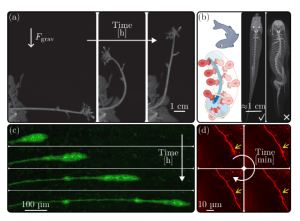 How to grow a straight filament. L Hoffmann, L Mahadevan. arXiv, 09 Jun 2026.
[ONLINE ARTICLE] [DOI] [View PDF] [Download PDF] How can a growing biological filament remain straight despite stochastic fluctuations in growth? Motivated by filamentary structures that develop reproducibly across biological systems, we study the stability of a noisy, growing elastic filament regulated by feedback. We formulate a minimal model in which growth responds to the filament's strain, curvature, and orientation through local or nonlocal spatiotemporal feedback laws. Linear stability analysis identifies the conditions under which these feedback mechanisms stabilize a straight configuration. In the presence of noise, we show that purely local feedback requires orientation sensing to suppress long-wavelength instabilities, whereas nonlocal feedback allows stabilization through proprioceptive (curvature) sensing alone. Coupling to an elastic substrate further suppresses large-scale fluctuations. Our results establish minimal control strategies that ensure robust straight growth and suggest experimental signatures for identifying the feedback mechanisms underlying morphogenesis. -
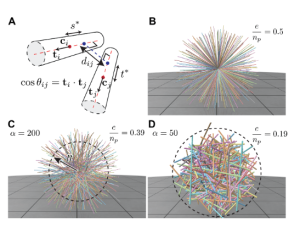 Emergent cohesion via self-caging in maximally entangled rod packings. Y Jung, L Mahadevan. arXiv, 18 May 2026.
[ONLINE ARTICLE] [DOI] [View PDF] [Download PDF] Random packings of disordered rigid rods exhibit emergent cohesion, as exemplified in a nest of twigs that is self-equilibrated, free-standing structures. We analyze the geometric motif underlying this cohesion using a rod packing that maximizes the average crossing number subject to non-penetration constraints. We show that this protocol leads to self-caging: collective geometric constraints that prevent rod escape even in finite systems with free boundaries, leading to packings that remain mechanically cohesive due to a combination of purely repulsive and frictional interactions. We show that self-caging is controlled by the available free-volume in translational and rotational configuration spaces, which is minimal when N/(Zα)=1/3 where N is the number of rods, α is the aspect ratio, and Z is the average coordination number. Our results establish a minimal geometric motif for entanglement-induced cohesion in athermal rod packings, with implications for cohesive granular matter without attractive forces. -
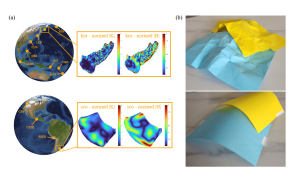 How geometry of subduction zones correlates with earthquake dynamics. O.Y.L. Chau, R Bendick, G.P.T. Choi, L Mahadevan. arXiv, 18 May 2026.
[ONLINE ARTICLE] [DOI] [View PDF] [Download PDF] Subduction zones on the surface of the Earth, where abrupt sliding leads to earthquakes, are generally curved and localized. How does the geometry of these zones influence the occurrence of megathrust earthquakes? Here we use a combination of simple scaling arguments and data analysis using the differential geometry of surfaces to examine the relationship between the earthquake productivity of subduction zones and their shape. A scaling argument suggests how interface curvature changes both the accumulation and release of stress relative to planar interfaces; conformable sliding along relatively flat subduction zones should lead to rare but large events, while curved subduction zones should lead to frequent smaller events. To test this, we leverage global geometry datasets and analyze the correlation between the surface curvatures of the subduction zones and the frequency and magnitude of earthquakes therein. Our analysis shows that weakly curved slab geometries are associated with rarer larger magnitude events, while slab geometries with a larger relative dispersion in curvature are associated with frequent but smaller magnitude events. Using different scale-dependent shape metrics of the subduction zones, we show that the earthquake productivity is influenced by the conformability of the overriding and downgoing plates. More broadly, our results suggest the need to incorporate the large-scale geometry of subduction zones in computational models and predictive frameworks for earthquake risk. -
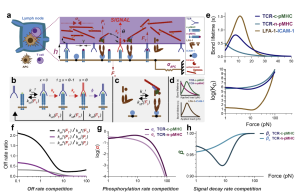 Substrate mediated mechanical forces enable optimal kinetic proofreading by T-cell receptors. N Jeffreys, J Brockman, T Heydari, B Nerger, W Jung, P Zandstra, L Mahadevan, D Mooney, S Shankar. arXiv. 14 Apr 2026.
[ONLINE ARTICLE] [DOI] [View PDF] [Download PDF] T-cells use molecular reactions with nonequilibrium error correction, i.e., proofreading, to discriminate between nearly identical antigens with high specificity and sensitivity. These receptor binding events are known to be force sensitive, yet traditional schemes of proofreading focus on reaction kinetics alone and do not consider the role of force dependent catch/slip bond behavior or interactions with mechanically engaged coreceptors such as adhesion molecules. To address this, we propose a minimal framework for proofreading of ligand discrimination by T-cell receptors (TCRs) that uses endogenous TCR mechanosensation and substrate-mediated mechanical interactions with adhesive proteins (load sharing) to improve recognition fidelity. We leverage the catch bond behavior of cognate antigens to delay decision making and amplify TCR signaling while discarding noncognate slip bond ligands in the presence of a force. By integrating our model with existing structural and molecular data, we show that substrate mechanics regulates the transmission of active cytoskeletal forces through a molecular clutch and controls the energization of bound TCRs needed for optimal proofreading. Our work demonstrates how mechanical forces and substrate properties can augment kinetic proofreading in T-cells, suggesting biomaterial design strategies for immunotherapies that tune the mechanical microenvironment of T-cells to achieve high fidelity TCR-ligand discrimination, antigen recognition, and activation. -
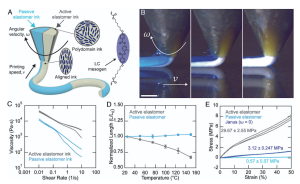 Rotational 3D printing of active-passive filaments and lattices with programmable shape morphing. M Abdelrahman, J Wilt, Y Jung, R Telles, G Paink, N Larson, J Aizenberg, L Mahadevan, J Lewis. Proceedings of the National Academy of Sciences, 22 Apr 2026.
[ONLINE ARTICLE] [DOI] [View PDF] [Download PDF] Natural filaments have exceptional control over curvature and twist enabled by directional responses embedded within their internal structure. To emulate this complex behavior, we use rotational multimaterial 3D printing (RM-3DP) to create composite fibers composed of active liquid crystal elastomers (LCEs) and passive elastomers. By controlling the rotation rate on-the-fly during printing, one can fabricate Janus filaments and lattices with spatially programmable composition, alignment, and shape-morphing behavior, including reversible bending, coiling, and twisting when thermally cycled above and below their nematic-to-isotropic transition temperature. A theoretical and computational framework corroborates our experimental findings and paves the way for a quantitative framework to understand and design shape-morphing filaments and lattices. -
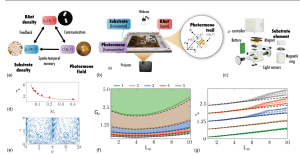 Robotectonics: emergent phototactic aggregation-disaggregation in swarms. F Giardina, G Prasath, L Mahadevan. Physical Review X Life. 10 Apr 2026.
[ONLINE ARTICLE] [DOI] [View PDF] [Download PDF] The collective construction of complex architectures by social insects involves the use of decentralized spatiotemporal signals in a dynamical environment that changes the behavior of the insects and is changed by them. Inspired by this original example of “stigmergy,” we show that a robot collective can nucleate, construct, and deconstruct aggregates via a trapping instability by simply altering their local transport behavior. We quantify these observations in terms of a two-dimensional phase space that encompasses agent-agent interaction and the agent-environment interaction (collection and deposition). Our results show how coordinated function can emerge spontaneously through simple local rules for sensing and action without the need for global representation, planning, or optimization/control algorithms, in sharp contrast with the traditional views of complex task execution. More broadly, our study shows that embodied collectives can leverage the environment as both a communication channel and a spatiotemporal memory, coupling organismal behavior to environmental remodeling leading to “exbodied intelligence.” -
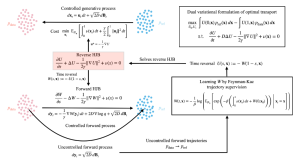 Generative optimal transport via forward-backward HJB matching. H Yang, V Krishnan, S Sinha, L Mahadevan. arXiv, 09 Apr 2026.
[ONLINE ARTICLE] [DOI] [View PDF] [Download PDF] Controlling the evolution of a many-body stochastic system from a disordered reference state to a structured target ensemble, characterized empirically through samples, arises naturally in non-equilibrium statistical mechanics and stochastic control. The natural relaxation of such a system - driven by diffusion - runs from the structured target toward the disordered reference. The natural question is then: what is the minimum-work stochastic process that reverses this relaxation, given a pathwise cost functional combining spatial penalties and control effort? Computing this optimal process requires knowledge of trajectories that already sample the target ensemble - precisely the object one is trying to construct. We resolve this by establishing a time-reversal duality: the value function governing the hard backward dynamics satisfies an equivalent forward-in-time HJB equation, whose solution can be read off directly from the tractable forward relaxation trajectories. Via the Cole-Hopf transformation and its associated Feynman-Kac representation, this forward potential is computed as a path-space free energy averaged over these forward trajectories - the same relaxation paths that are easy to simulate - without any backward simulation or knowledge of the target beyond samples. The resulting framework provides a physically interpretable description of stochastic transport in terms of path-space free energy, risk-sensitive control, and spatial cost geometry. We illustrate the theory with numerical examples that visualize the learned value function and the induced controlled diffusions, demonstrating how spatial cost fields shape transport geometry analogously to Fermat's Principle in inhomogeneous media. Our results establish a unifying connection between stochastic optimal control, Schrödinger bridge theory, and non-equilibrium statistical mechanics. -
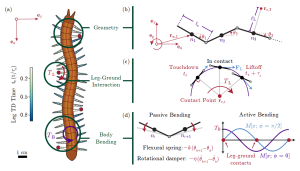 Embodied intelligence solves the centipede's dilemma. A Dionne, F Giardina, L Mahadevan. arXiv. 11 Mar 2026.
[ONLINE ARTICLE] [DOI] [View PDF] [Download PDF] Although commonly associated with limbless animals like snakes and fish, multi-legged organisms like centipedes also utilize undulatory locomotion. Whether these undulations are actively reinforced or resisted by the axial musculature remains an open question. We present a dynamical model of centipede locomotion that integrates leg-ground interactions, passive body mechanics, and active lateral musculature. By varying stepping rate, actuation, and body stiffness, we examine how locomotor strategies affect speed and an effective energetic efficiency. Coordination emerges only when body stiffness is tuned to stepping frequency: overly flexible bodies lose synchrony, while overly rigid ones move slowly and inefficiently. This leads to the prediction that centipedes utilize speed dependent active stiffness to maintain this coordination. Our results suggest that lateral muscles also have a speed dependent function, revealed by optimizing speed and an effective cost, that resists a phase lag between leg touchdowns and body curvature. Together, we find that centipedes actively modulate body mechanics to achieve rapid, efficient locomotion, highlighting how complex control can emerge from embodied physical properties rather than solely from neural computation. -
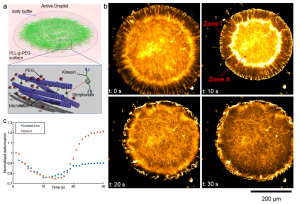 Evaporation-induced pattern formation and wetting in active microtubule-kinesin droplets. V Nasirimarekani, M Nejad, O Ramirez-Soto, S Ali, S Karpitschka, L Mahadevan, I Guido. arXiv, 10 Feb 2026
[ONLINE ARTICLE] [DOI] [View PDF] [Download PDF] Active networks composed of biopolymers and motor proteins provide versatile biomimetic systems that have advanced active matter physics and deepened our understanding of cytoskeletal dynamics and self-organization under diverse stimuli. In these systems, activity arises in aqueous solutions where motor proteins cross-link biopolymers and generate active stress driving the emergent network behavior. Here, we establish the active network in the form of a sessile, multi-component droplet on a substrate and investigate how evaporation influences its dynamics. We focus on how mass loss and compositional changes in the droplet reshape the behavior of the active suspension. We show that capillary and Marangoni flows drive the self-organization of microtubules into a distinctive radial arrangement within the droplet. The cross-linking ability of motor proteins gives rise to a striking non-monotonic wetting behavior, where the extensile stresses generated by the motor proteins strongly affect the characteristic timescale of the contact-line retracting and subsequent expansion. Using a combined experimental and theoretical approach, we demonstrate the crucial role of crosslinking in evaporating microtubule networks, and explain how active stresses together with evaporation-induced flows govern the dynamics of reconstituted microtubule systems and their wetting behavior. Evaporating droplets have recently attracted significant attention in the scientific community, and the findings of the setup presented in this study can have broad implications, ranging from self-organization and mechanical pattern formation in biological systems to questions about the origin of life. -
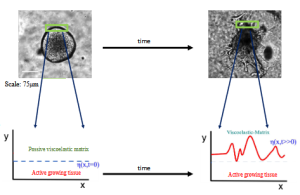 Morphological instability of an invasive active-passive interface. S Sinha, H Yang, L Mahadevan. arXiv, 10 Feb 2026
[ONLINE ARTICLE] [DOI] [View PDF] [Download PDF] Morphological instabilities of growing tissues that impinge on passive materials are typical of invasive cancers. To explain these instabilities in experiments on breast epithelial spheroids in an extracellular matrix, we develop a continuum phase field model of a growing active liquid expanding into a passive viscoelastic matrix. Linear stability analysis of the sharp-interface limit of the governing equations predicts that the tissue interface can develops long-wavelength instabilities, but these instabilities are suppressed when the active carcinoid is embedded in an elastic matrix. We develop a theoretical morphological phase diagram, and complement these with two-dimensional finite element (FEM) phase-field simulations to track the nonlinear evolution of the interface with results consistent with theoretical predictions and experimental observations. Our study provides a basis for the emergence of interfacial instabilities in active-passive systems with the potential to control them. -
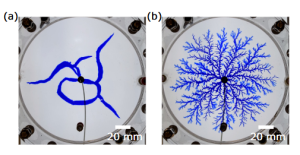 Self-organized breakthrough morphodynamics in fluid-driven branching. J Tauber, J Asnacios, L Mahadevan. Physical Review Fluids, 02 Feb 2026
[ONLINE ARTICLE] [DOI] [View PDF] [Download PDF] Self-organized branching instabilities in fluids arise from the interplay of rheology, interfacial forcing and boundary constraints. We investigate the morphologies that develop when a liquid is injected into a Hele-Shaw cell filled with a yield-stress fluid, with outflow constrained to a single point sink. A transition in branching morphodynamics emerges: at low injection rates, a single finger dominates breakthrough, whereas at high rates, arborized structures form and reorganize upon reaching the sink. We explain this sudden shift as a function of the fluid's switchlike local response to dynamical stresses and the role of out-of-plane confinement, and show that at the transition, breakthrough occurs with minimal injected fluid. Furthermore, the emergence of different breakthrough morphologies between the source and sink shows a trade off between speed and accuracy in these arborization patterns. Overall, our study highlights how the interplay between local material response and global constraints determines branching morphodynamics. -
 Stigmergic optimal transport. V Krishnan, L Mahadevan. arXiv, 07 01 2026.
[ONLINE ARTICLE] [DOI] [View PDF] [Download PDF] Efficient navigation in swarms often relies on the emergence of decentralized approaches that minimize traversal time or energy. Stigmergy, where agents modify a shared environment that then modifies their behavior, is a classic mechanism that can encode this strategy. We develop a theoretical framework for stigmergic transport by casting it as a stochastic optimal control problem: agents (collectively) lay and (individually) follow trails while minimizing expected traversal time. Simulations and analysis reveal two emergent behaviors: path straightening in homogeneous environments and path refraction at material interfaces, both consistent with experimental observations of insect trails. While reminiscent of Fermat's principle, our results show how local, noisy agent+field interactions can give rise to geodesic trajectories in heterogeneous environments, without centralized coordination or global knowledge, relying instead on an embodied slow fast dynamical mechanism. -
 Hamiltonian bridge for scale-dependent optimal control of particles and fields. V Krishnan, S Sinha, L Mahadevan. Newton, 31 Dec 2025.
[ONLINE ARTICLE] [DOI] [View PDF] [Download PDF] Patterns in non-equilibrium systems—from phase separation to tissue morphogenesis—arise from microscopic stochastic dynamics but are most easily specified and measured at macroscopic scales. This work introduces a unified physics-based framework for generative control of such patterns that bridges particle (Lagrangian) and field (Eulerian) descriptions. Starting from overdamped Langevin dynamics for interacting particles with internal states, this work defines smoothed mesoscopic fields and a free-energy functional that governs macroscopic evolution. The resulting flows are projected back to particles via smoothed-particle hydrodynamics, closing a micro-macro modeling loop. Control objectives are posed at the field level but actuated at the particle level, enabling scale-dependent design. To solve the resulting high-dimensional stochastic control problem, an adjoint-based path integral control (APIC) is introduced, which marries an exact Feynman-Kac linearization of the Hamilton-Jacobi-Bellman (HJB) equation with continuous-time backpropagation and automatic differentiation to compute exact gradients of the value functional from sampled trajectories. Instead of solving the full HJB equation, APIC samples uncontrolled trajectories forward and propagates adjoint co-states backward to compute control gradients efficiently. The controlled dynamics define a Hamiltonian bridge: a physically constrained interpolation between initial and target patterns that respects conservation laws and energetic structure. The framework is demonstrated across canonical systems—navigation on complex landscapes, Allen-Cahn (non-conserved) and Cahn-Hilliard (conserved) phase separation, thin-film droplet self-assembly, reaction-diffusion patterning, and a cell-fate/migration model—showing scalable control and interpretable transport geometries. Conceptually, this links generative modeling and optimal control with variational physics, offering a route to programmable pattern formation in soft matter, active media, and developmental systems and suggesting a path toward inference-in-the-loop and experimental actuation. -
 Optimal bioelectric control accelerates collective wound healing. J Yodh, Y Lin, S Sinha, V Krishnan, L Mahadevan, D Cohen. biorXiv, 19 Nov 2025.
[ONLINE ARTICLE] [DOI] [View PDF] [Download PDF] Effective wound healing relies on thousands of cells collectively migrating to close the gap. It is increasingly clear that part of this migration is driven by endogenous electrochemical fields which point towards the center of skin wounds and guide collective cell migration through “electrotaxis”. Mounting evidence suggests exogenously applied electric fields can accelerate healing, but progress in this field has been limited by the use of brute-force, global stimulation strategies that are wound agnostic and reflect neither the collective nature of the healing process nor the dynamic nature of the wound geometry. Here, we develop an experimental system to study how monolayer mouse skin responds to spatiotemporally patterned electric fields. We first show that local electrical stimulation can produce near global cell migration responses arising from cell-cell mechanical adhesion. We apply this strategy to 2D circular wounds using a local ring electric field near the wound edge and reveal how to tune the timing of local stimulation to avoid cellular jamming. Finally, we integrate our findings with a biophysics-informed optimal control strategy to tune both when and where the electric field should be applied in time, resulting in dramatic improvements to healing. -
 Surface wakes on ultra-soft solids. A Chakrabarti, D Jaganathan, R Haussman, L Mahadevan. Physical Review Letters, 02 Apr 2026.
[ONLINE ARTICLE] [DOI] [View PDF] [Download PDF] We explore the dynamical response of the free surface of an ultrasoft solid driven by a localized moving pressure disturbance. Experiments reveal a steady V-shaped wake analogous to a surface Mach wedge. A simple geometric argument provides a qualitative explanation consistent with observations. A theoretical framework combining elastodynamic, capillary, and gravitational effects yields a generalized dispersion relation that smoothly interpolates between Kelvin’s theory of liquid interface wakes and Rayleigh’s theory of elastic surface waves. Our analysis explains the observed Mach-like behavior quantitatively while also emphasizing how elastodynamic effects can generate effective damping through radiative leakage. Together, our experiments and theory reveal the existence of a new regime that bridges fluid and solid surface-wave physics, offering new routes for probing the dynamics of soft interfaces. -
 Courtship vocalizations in male ducks: spectral composition and resonance of the syringeal bulla. D Mishkind, P Kaneelil, M Lester, L Mahadevan, C Tabin, F Goller. Journal of Experimental Biology, 03 Nov 2025.
[ONLINE ARTICLE] [DOI] [View PDF] [Download PDF] Ducks display a unique and dramatic sexual dimorphism in their vocal organ, the syrinx. Males have a left-sided bulla that is not present in females and that has been long hypothesized to play a role in courtship vocalizations, though this connection has never been tested. The large, hollow morphology of the bulla and its proximity to the sound-producing vocal folds introduce the possibility that it may work as a Helmholtz resonator, which makes it possible to predict the resonance frequencies enhanced by this structure. We found that during early ontogeny, the distribution of energy across the harmonic spectrum of contact calls is not different between males and females. We then used microcomputed tomography (µCT) scans of duck syringes to estimate resonance frequencies of the bullae and compared these with spectral features of their vocalizations. This comparison overall supports the idea that the bulla resonance may specifically enhance aspects of courtship vocalizations, especially in species that have a tonal courtship whistle. This was further supported when we tested the frequencies produced when air was blown through 3D printed bullae. We also saw potential influence of the bulla in non-courtship vocalizations, which could be explored further with a greater understanding of the input of other vocal tract features that influence vocalization. We observed that, in general, excepting the common eider, bulla size shows a weak positive correlation with male bird body mass. This study provides support for the long-held hypothesis that the adult male duck bulla influences resonance frequencies, in particular in courtship vocalizations. -
 Distributed neural computation and the evolution of the first brains. V Chandra, M Nejad, A Kann, A Salem, K Hill, L Mahadevan, M Srivastava. biorXiv, 30 Sep 2025.
[ONLINE ARTICLE] [DOI] [View PDF] [Download PDF] Brains likely evolved from diffuse nerve nets in the Precambrian, but we do not know what the first brains looked like or how they were organized. Acoel worms, the sister lineage to all other animals with brains, offer a window into this transition. We studied the three-banded panther worm Hofstenia miamia, whose brain is diffuse and unlike any previously described: it shows little anatomical or functional regionalization or stereotypy. Worms forage successfully even after large portions of the brain are removed, suggesting most regions can perform most computations. Neural cell type markers are also distributed across the brain with little regionalization. High-resolution studies of hunting reveal that more brain tissue improves performance, but no specific brain region is required. These results lead us to propose that H. miamia’s brain is built from computationally pluripotent ‘tiles’, whose interactions generate coherent behavior. This architecture suggests that early brains arose by condensation of diffuse nerve nets into unregionalized brains, with regionalization evolving secondarily. -
 Self-organized adaptive branching in frangible matter. P Fischer, J Tauber, T Koch, L Mahadevan. Soft Condensed Matter, 30 Sep 2025.
[ONLINE ARTICLE] [DOI] [View PDF] [Download PDF] Soft and frangible materials that remodel under flow can give rise to branched patterns shaped by material properties, boundary conditions, and the time scales of forcing. We present a general theoretical framework for emergent branching in these frangible (or threshold) materials that switch abruptly from resisting flow to permitting flow once local stresses exceed a threshold, relevant for examples as varied as dielectric breakdown of insulators and the erosion of soft materials. Simulations in 2D and 3D show that branching is adaptive and tunable via boundary conditions and domain geometry, offering a foundation for self-organized engineering of functional transport architectures. -
 Reversible superdeformability of hiPSC epithelial cortinoids. A Jana, J Tauber, A Boyreau, G Recher, M Feyeux, B Gurchenkov, K Alessandri, P Nassoy, L Mahadevan. Proceedings of the US National Academy of Sciences, 18 May 2026.
[ONLINE ARTICLE] [DOI] [View PDF] [Download PDF] Epithelial cortinoids, fluid filled shells formed from induced pluripotent stem cells (iPSCs), must accommodate large deformations during growth and morphogenesis. Using inflation–deflation assays and high-resolution imaging, we find that these fluid-filled shells are weakly-pressurized and achieve extreme deformability through reversible soft modes of deformation accommodated by the cytoskeleton. We show that cytoskeletal elements such as actin localized along lateral cell edges undergo tilt and bend instabilities that buffer mechanical load by decoupling apico–basal stretching from lateral extension. These reversible instabilities act as elastic safety valves, permitting large shape changes without loss of epithelial hydraulic and topological integrity. A minimal theoretical and computational model demonstrates how tilt and bend reduce effective resistance to radial thinning and explains the observed pressure–strain softening. Thus, iPSC shells exploit reversible cytoskeletal instabilities as mechanical buffers, enabling robust tolerance of large deformations in developing epithelia. -
 General integrated rate law for complex self-assembly reactions reveals the mechanism of amyloid-beta coaggregation. A Dear, G Meisl, E Axell, X Yang, R Cukalevski, Michaels, T C T, S Linse, L Mahadevan, A Carlson. Physical Chemistry and Chemical Physics, 02 Sep 2025.
[ONLINE ARTICLE] [DOI] [View PDF] [Download PDF] Analyzing kinetic experiments on protein aggregation using integrated rate laws has led to numerous advances in our understanding of the fundamental chemical mechanisms behind amyloidogenic disorders such as Alzheimer's and Parkinson's diseases. However, the description of biologically relevant processes may require rate equations that are too complex to solve using existing methods, hindering mechanistic insights into these processes. An example of significance is coaggregation in environments containing multiple amyloid-beta (Aβ) peptide alloforms, which may play a crucial role in the biochemistry of Alzheimer's disease but whose mechanism is still poorly understood. Here, we use the mathematics of Lie symmetry to derive a general integrated rate law valid for most plausible linear self-assembly reactions. We use it in conjunction with experimental data to determine the mechanism of … -
 Viscous adhesion in vibrated sheets: elastohydrodynamics with inertia and compressibility effects. S Poulain, T Koch, L Mahadevan, A Carlson. Fluid Dynamics, Pages 38, 02 Sep 2025.
[ONLINE ARTICLE] [DOI] [View PDF] [Download PDF] Inspired by recent experiments demonstrating that vibrating elastic sheets can function as seemingly contactless suction cups, we investigate the elastohydrodynamic hovering of a thin elastic sheet vibrating near a rigid substrate. Previous theoretical work suggests that the hovering height results from a balance between the active forcing that triggers the vibrations, the bending forces associated with the sheet's deformation, the viscous lubrication flow between the sheet and the substrate, and the sheet's weight. Here, we extend this analysis beyond the asymptotic regime of weak forcing and explore the regime of strong forcing through numerical simulations. We further quantify the influence of fluid inertia and compressibility on the equilibrium hovering height and the maximum load that can be supported. Both effects are found to introduce repulsive contributions to the net force on the sheet, which can significantly reduce its adhesive strength. Beyond providing insights into soft contactless grippers and swimming near surfaces, our analysis is relevant to the elastohydrodynamics of squeeze films and near-field acoustic levitation. -
 Collective synchrony in confluent, pulsatile epithelia. W Tang, M Nejad, A Pegoraro, L Mahadevan, M Guo. Soft Condensed Matter, Pages 23, 23 July 2025.
[ONLINE ARTICLE] [DOI] [View PDF] [Download PDF] Collective cell migration lies at the intersection of developmental biology and non-equilibrium physics, where active processes give rise to emergent patterns that are biologically relevant. Here, we investigate dilatational modes--cycles of expansion and contraction--in epithelial monolayers, and show that the divergence of the velocity field exhibits robust, large-scale temporal oscillations. These oscillatory patterns, reminiscent of excitable media and their biological analogs, emerge spontaneously from the coupled dynamics of actively pulsing cells. We find that the temporal persistence of these oscillations varies non-monotonically with cell density: synchrony initially increases with density, reaches a maximum at intermediate densities and is lost at higher values. This trend mirrors changes in the spatial correlation length of cell-cell interactions, and the density of topological defects in the system, suggesting a shared physical origin. We develop a continuum model in which a complex-valued Ginzburg-Landau-type field that governs the amplitude and phase of oscillations is coupled to local cell density. Simulations reproduce the observed behavior, revealing that local density adapts to phase patterns, reinforcing temporal coherence up to a critical density, and variations in the density of topological defects as a function of cell density. Extending our analysis to breast cancer cell lines with increasing invasiveness, we find that malignant cells exhibit longer phase persistence and fewer topological defects, suggesting a mechanistic link between temporal coherence and metastatic potential. Together, these results highlight the role of density-dependent synchrony dynamics as a fundamental, quantifiable mode of collective behavior in active epithelial matter, with implications for morphogenesis, cancer progression, and tissue diagnostics. -
 Optimal switching strategies for navigation in stochastic settings. F Mori, L Mahadevan. Proceedings of the Royal Society, Volume 22, Issue 227, 18 June 2025.
[ONLINE ARTICLE] [DOI] [View PDF] [Download PDF] When navigating complex environments, animals often combine multiple strategies to mitigate the effects of external disturbances. These modalities often correspond to different sources of information, leading to speed – accuracy trade-offs. Inspired by the intermittent reorientation strategy seen in the behaviour of the dung beetle, we consider the problem of the navigation strategy of a correlated random walker moving in two dimensions. We assume that the heading of the walker can be reoriented to the preferred direction by paying a fixed cost as it tries to maximize its total displacement in a fixed direction. Using optimal control theory, we derive analytically and confirm numerically the strategy that maximizes the walker’s speed, and show that the average time between reorientations scales inversely with the magnitude of the environmental noise. We then extend our framework to describe execution errors and … -
 Controlling moving interfaces in solid-state batteries. S Mosleh, E Annevelink, V Viswanathan, L Mahadevan. Proceedings of the Royal Society, Volume 481, Issue 2315, 2025/6/4.
[ONLINE ARTICLE] [DOI] [View PDF] [Download PDF] All-solid-state lithium metal batteries enable high-energy-density applications, such as electric aviation, but suffer from instabilities during operation that lead to rough interfaces between the metal and electrolyte. These cause void formation and dendrite growth that degrades performance and safety. Inspired by the morphogenetic control of thin lamina such as tree leaves that robustly grow into flat shapes, we propose a range of approaches to control lithium metal stripping and plating via a range of feedback mechanisms. A minimal model that captures the coupling between interface motion, thermodynamics, electrochemistry and mechanics shows that local feedback cannot stop the formation of rough interfaces, while long-range feedback allows us to stabilize the interface and keep it flat. Our theoretical study suggests various approaches to achieve this, and provides the beginning of a practical framework for … -
 Approximate Lie symmetries and singular perturbation theory. A Dear, L Mahadevan. Proceedings of the Royal Society, Volume 481, Issue 2312, 2025/4/16.
[ONLINE ARTICLE] [DOI] [View PDF] [Download PDF] Perturbation theory plays a central role in the approximate solution of nonlinear differential equations. However, its naïve application often yields divergent series solutions. While these can be made convergent using singular perturbation methods of various types, the procedures used can be subtle owing to the lack of globally applicable algorithms. Inspired by the fact that all exact solutions of differential equations are consequences of their (Lie) symmetries, we reformulate perturbation theory for differential equations as a series expansion of their solutions’ symmetries. This is a change in perspective from the usual method of obtaining series expansions of the solutions themselves. We show that these approximate symmetries are straightforward to calculate and are never singular; their integration is therefore an easier way of constructing uniformly convergent solutions. This geometric viewpoint naturally … -
 Noise-Enabled Goal Attainment in Crowded Collectives. Lucy Liu, Justin Werfel, Federico Toschi, L. Mahadevan. Multiagent Systems 13 Feb 2026.
[ONLINE ARTICLE] [DOI] [View PDF] [Download PDF] In crowded environments, individuals must navigate around other occupants to reach their destinations. Understanding and controlling traffic flows in these spaces is relevant for coordinating robot swarms and designing infrastructure for dense populations. Here, we use simulations, theory, and experiments to study how adding stochasticity to agent motion can reduce traffic jams and help agents travel more quickly to prescribed goals. A computational approach reveals the collective behavior. Above a critical noise level, large jams do not persist. From this observation, we analytically approximate the swarm’s goal attainment rate, which allows us to solve for the agent density and noise level that maximize the goals reached. Robotic experiments corroborate the behaviors observed in our simulated and theoretical results. Finally, we compare simple, local navigation approaches with a sophisticated but computationally costly central planner. A simple reactive scheme performs well up to moderate densities and is far more computationally efficient than a planner, motivating further research into robust, decentralized navigation methods for crowded environments. By integrating ideas from physics and engineering using simulations, theory, and experiments, our work identifies new directions for emergent traffic research. -
 Thin active nematohydrodynamic layers: asymptotic theories and instabilities. Mehrana R. Nejad, L. Mahadevan. Biological Physics 19 Jun 2025.
[ONLINE ARTICLE] [DOI] [View PDF] [Download PDF] Starting from a three-dimensional description of an active nematic layer, we employ an asymptotic theory to derive a series of low-dimensional continuum models that capture the coupled dynamics of flat and curved films, including variations in film thickness, shape deformations, internal velocity fields, and the dynamics of orientational order. Using this asymptotic theory, we investigate instabilities driven by activity in both the nematic and isotropic phases for cylindrical and flat films. In the flat case, we demonstrate that incorporating shape and thickness variations fundamentally alters the bend and splay nature of instabilities compared to conventional two dimensional nematic instabilities. In the isotropic phase, we find that both extensile and contractile activity can induce nematic order, in contrast with active nematics on fixed surfaces, where only extensile activity leads to ordering. For the case of curved geometries such as a cylindrical film, we reveal that thickness and shape instabilities are inherently coupled. In the isotropic phase, the emergence of nematic order triggers both thickness and shape instabilities. In the nematic phase, contractile activity induces thickness instabilities, which in turn drive geometric deformations. Our results highlight the crucial interplay between activity, thickness variations, and curvature, providing new insights into the behavior of active nematic films beyond the conventional two dimensional paradigm that has been studied to date. -
 Stochastic elastohydrodynamics of soft valves. Mengfei He, Sungkyu Cho, Gianna Dafflisio, Sitaram Emani, L Mahadevan. Fluid Dynamics.
[ONLINE ARTICLE] [DOI] [View PDF] [Download PDF] Soft valves serve to modulate and rectify flows in complex vasculatures across the tree of life, e.g. in the heart of every human reading this. Here we consider a minimal physical model of the heart mitral valve modeled as a flexible conical shell capable of flow rectification via collapse and coaptation in an impinging (reverse) flow. Our experiments show that the complex elastohydrodynamics of closure features a noise-activated rectification mechanism. A minimal theoretical model allows us to rationalize our observations while illuminating a dynamical bifurcation driven by stochastic hydrodynamic forces. Our theory also suggests a way to trigger the coaptation of soft valves on demand, which we corroborate using experiments, suggesting a design principle for their efficient operation. -
 Orientational ordering in active nematic solids. Haiqian Yang, Ming Guo, L. Mahadevan, L Mahadevan. Biological Physics.
[ONLINE ARTICLE] [DOI] [View PDF] [Download PDF] In vivo and in vitro systems of cells and extra-cellular matrix (ECM) systems are well known to form ordered patterns of orientationally aligned fibers. Here, we interpret them as active analogs of the (disordered) isotropic to the (ordered) nematic phase transition seen in passive liquid crystalline elastomers. A minimal theoretical framework that couples cellular activity (embodied as mechanical stress) and the finite deformation elasticity of liquid crystal elastomers sets the stage to explain these patterns. Linear stability analysis of the governing equations about simple homogeneous isotropic base states shows how the onset of periodic morphologies depends on the activity, elasticity, and applied strain, provides an expression for the wavelength of the instability, and is qualitatively consistent with observations of cell-ECM experiments. Finite element simulations of the nonlinear problem corroborate the results of linear analysis. These results provide quantitative insights into the onset and evolution of nematic order in cell-matrix composites. -
 Topological dynamics of rapid non-planar gaits in slithering snakes. N. Charles, R. Chelakkot, M. Gazzola, B. Young, L Mahadevan. Nature Physics volume 21, pages 856–860 (2025)
[ONLINE ARTICLE] [DOI] [View PDF] [Download PDF] Snakes exhibit a wide variety of gaits, including gliding in air and sidewinding on land, which is particularly notable for its out-of-plane motion. Here we report the observation of another non-planar gait used as an escape strategy from threatening situations by juvenile anacondas (Eunectes notaeus), which we refer to as the S-start due to its shape. In this transient mode of locomotion, the snake writhes and bends out of the plane while rolling forward about its midsection without slippage. To quantify our observations, we develop a model for an active non-planar filament that interacts anisotropically with a frictional substrate. We demonstrate that locomotion is due to a propagating localized pulse of a topological quantity—the link density. A two-dimensional phase space characterized by scaled body weight and muscular torque shows that relatively light juveniles are capable of S-starts, whereas heavy adults are not, consistent with our experiments. We also show that a periodic sequence of S-starts naturally leads to a sidewinding gait. -
 Image reconstruction from an elastically distorted scan. A Lopez, L Mahadevan. Proceedings of the Royal Society (A). 2503.11584. 01 Apr 2026.
[ONLINE ARTICLE] [DOI] [View PDF] [Download PDF] We consider the problem of inverting the artifacts associated with scanning a page from an open book, i.e. "xeroxing." The process typically leads to a non-uniform combination of distortion, blurring and darkening owing to the fact that the page is bound to a stiff spine that causes the sheet of paper to be bent inhomogeneously. Complementing purely data-driven approaches, we use knowledge about the geometry and elasticity of the curved sheet to pose and solve a minimal physically consistent inverse problem to reconstruct the image. Our results rely on 3 dimensionless parameters, all of which can be measured for a scanner, and show that we can improve on the data-driven approaches. More broadly, our results might serve as a "textbook" example and a tutorial of how knowledge of generative mechanisms can speed up the solution of inverse problems. -
 Morphogenesis and morphometry of brain folding patterns across species. S Yin, C Liu, GPT Choi, Y Jung, K Heuer, R Toro, L Mahadevan. biorXiv. 2025/3/10.
[ONLINE ARTICLE] [DOI] [View PDF] [Download PDF] Evolutionary adaptations associated with the formation of a folded cortex in many mammalian brains are thought to be a critical specialization associated with higher cognitive function. The dramatic surface expansion and highly convoluted folding of the cortex during early development is a theme with variations that suggest the need for a comparative study of cortical gyrification. Here, we use a combination of physical experiments using gels, computational morphogenesis, and geometric morphometrics to study the folding of brains across different species. Starting with magnetic resonance images of brains of a newborn ferret, a fetal macaque, and a fetal human, we construct two-layer physical gel brain models that swell superficially in a solvent, leading to folding patterns similar to those seen in vivo. We then adopt a three-dimensional continuum model based on differential growth to simulate cortical folding in silico. Finally, we deploy a comparative morphometric analysis of the in vivo, in vitro, and in silico surface buckling patterns across species. Our study shows that a simple mechanical instability driven by differential growth suffices to explain cortical folding and suggests that variations in the tangential growth and different initial geometries are sufficient to explain the differences in cortical folding across species. -
 Phase transitions in the rolling of irregular cylinders and spheres. Daoyuan Qian, Yeonsu Jung, L. Mahadevan. Proceedings of the National Academy of Sciences 122, e2417161122. March 5, 2025.
[ONLINE ARTICLE] [DOI] -
 Biophysical basis for brain folding and misfolding patterns in ferrets and humans. GPT Choi, S Yin, C Liu, G Sejourne, R Smith, C Walsh, L Mahadevan. biorXiv. 2025/3/6.
[ONLINE ARTICLE] [DOI] [View PDF] [Download PDF] A mechanistic understanding of neurodevelopment requires us to follow the multiscale processes that connect molecular genetic processes to macroscopic cerebral cortical formations and thence to neurological function. Using magnetic resonance imaging of the brain of the ferret, a model organism for studying cortical morphogenesis, we create in vitro physical gel models and in silico numerical simulations of normal brain gyrification. Using observations of genetically manipulated animal models, we identify cerebral cortical thickness and cortical expansion rate as the primary drivers of dysmorphogenesis and demonstrate that in silico models allow us to examine the causes of aberrations in morphology and developmental processes at various stages of cortical ontogenesis. Finally, we explain analogous cortical malformations in human brains, with comparisons with human phenotypes induced by the same genetic defects, providing a unified perspective on brain morphogenesis that is driven proximally by genetic causes and affected mechanically via variations in the geometry of the brain and differential growth of the cortex. -
 Speed-accuracy trade-offs in Roulette betting. S Chen, G Prasath, A Marantan, L Mahadevan. biorXiv. 2025/3/5.
[ONLINE ARTICLE] [DOI] [View PDF] [Download PDF] To investigate real-time decision-making in a simplified context, we analyze the trade-offs individuals make using a game of Roulette. In this game, players observe a ball that gradually decelerates as it moves around a circular track, and the participants must predict where the ball will ultimately stop. Players are rewarded for making rapid, accurate predictions, while slower but accurate predictions, or fast yet inaccurate ones, result in lower rewards. In this speed-accuracy trade-off setup we can calculate the optimal timing for placing a bet based on the ball's initial speed and the deceleration rate, given the capacity of an individual's tracking abilities. We find that the participants improve their performance by accruing more reward with each trial and saturates close to the optimal performance, indicating that individuals learn the parameters of the physical model as well as a representation of the form of the reward under constrained time. Looking at the correlation between the bet time of the participant and the optimal betting time, the response delay and reward accrued, we find that the participant can be classified on a novice-expert spectrum. Our study offers ways to quantify human adaptation in competitive and dynamic environments such as sports, which may be helpful in enhancing participant performance. -
 Entanglement transition in random rod packings. Y Jung, T Plumb-Reyes, Lin-G, L Mahadevan. Proceedings of the National Academy of Sciences. 122.e2401868122. 2025/2/21.
[ONLINE ARTICLE] [DOI] Random packings of stiff rods are self-supporting mechanical structures stabilized by long-range interactions induced by contacts. To understand the geometrical and topological complexity of the packings, we first deploy X-ray computerized tomography to unveil the structure of the packing. This allows us to directly visualize the spatial variations in density, orientational order, and the entanglement, a mesoscopic field that we define in terms of a local average crossing number, a measure of the topological complexity of the packing. We find that increasing the aspect ratio of the constituent rods in a packing leads to a proliferation of regions of strong entanglement that eventually percolate through the system and correlated with a sharp transition in the mechanical stability of the packing. To corroborate our experimental findings, we use numerical simulations of contacting elastic rods and characterize their stability to … -
 Hovering of an actively driven fluid-lubricated foil. S Poulain, T Koch, L Mahadevan, A Carlson. arXiv . 2025/1/28.
[ONLINE ARTICLE] [DOI] [View PDF] [Download PDF] Inspired by recent experimental observations of a harmonically excited elastic foil hovering near a wall while supporting substantial weight, we develop a theoretical framework that describes the underlying physical effects. Using elastohydrodynamic lubrication theory, we quantify how the dynamic deformation of the soft foil couples to the viscous fluid flow in the intervening gap. Our analysis shows that the soft foil rectifies the reversible forcing, breaking time-reversal symmetry; the relative spatial support of the forcing determines whether the sheet is attracted to or repelled from the wall. A simple scaling law predicts the time-averaged equilibrium hovering height and the maximum weight the sheet can sustain before detaching from the surface. Numerical simulations of the governing equation corroborate our theoretical predictions, are in qualitative agreement with experiments, and might explain the behavior of organisms while providing design principles for soft robotics. -
 Extracellular volume expansion drives vertebrate axis elongation. A Michaut, A Mongera, A Gupta, O Tarazona, M Serra, G-M Kefala, P Rigoni, J-G Lee, F Rivas, A Hall, L Mahadevan, K Guevorkian, O? Pourquie, Current Biology. 2025/1/28, Volume 354,
[ONLINE ARTICLE] [DOI] The vertebrate bauplan is primarily established via the formation of embryonic tissues in a head-to-tail progression. The mechanics of this elongation, which requires the presomitic mesoderm (PSM), remain poorly understood. Here, we find that avian PSM explants can elongate autonomously when physically confined in vitro, producing a pushing force promoting posterior elongation of the embryo. This tissue elongation is caused by volumetric expansion, which results from an increase in the extracellular fraction accompanied by graded cellular motility. We show that fibroblast growth factor (FGF) signaling promotes glycolysis-dependent production of hyaluronic acid (HA), which is required for expansion of the posterior PSM. Our findings link body axis elongation to tissue expansion through the metabolic control of extracellular matrix production downstream of FGF signaling. -
 Convergent flow-mediated mesenchymal force drives embryonic foregut constriction and splitting. R Yan, L Hoffmann, P Oikonomou, D Li, C Lee, H Gill, A Mongera, N Nerurkar, Mahadevan, biorXiv. 2025/1/23.
[ONLINE ARTICLE] [DOI] The transformation of a two-dimensional epithelial sheet into various three-dimensional structures is a critical process in generating the diversity of animal forms. Previous studies of epithelial folding have revealed diverse mechanisms driven by epithelium-intrinsic or -extrinsic forces. Yet little is known about the biomechanical basis of epithelial splitting, which involves extreme folding and eventually a topological transition breaking the epithelial tube. Here, we leverage tracheal-esophageal separation (TES), a critical and highly conserved morphogenetic event during tetrapod embryogenesis, as a model system for interrogating epithelial tube splitting both in vivo and ex vivo. Comparing TES in chick and mouse embryos, we identified an evolutionarily conserved, compressive force exerted by the mesenchyme surrounding the epithelium, as being necessary to drive epithelial constriction and splitting. The compressive force is mediated by localized convergent flow of mesenchymal cells towards the epithelium. We further found that Sonic Hedgehog (SHH) secreted by the epithelium functions as an attractive cue for mesenchymal cells. Removal of the mesenchyme, inhibition of cell migration, or loss of SHH signaling all abrogate TES, which can be rescued by externally applied pressure. These results unveil the biomechanical basis of epithelial splitting and suggest a mesenchymal origin of tracheal-esophageal birth defects. -
 Lyapunov-Schmidt bifurcation analysis of a supported compressible elastic beam. E-H Yong, L Mahadevan, arXiv. 2025/1/14.
[ONLINE ARTICLE] [DOI] The archetypal instability of a structure is associated with the eponymous Euler beam, modeled as an inextensible curve which exhibits a supercritical bifurcation at a critical compressive load. In contrast, a soft compressible beam is capable of a subcritical instability, a problem that is far less studied, even though it is increasingly relevant in the context of soft materials and structures. Here, we study the stability of a soft extensible elastic beam on an elastic foundation under the action of a compressive axial force, using the Lyapunov-Schmidt reduction method which we corroborate with numerical calculations. Our calculated bifurcation diagram differs from those associated with the classical Euler-Bernoulli beam, and shows two critical loads, , for each buckling mode . The beam undergoes a supercritical pitchfork bifurcation at for all and slenderness. Due to the elastic foundation, the lower order modes at exhibit subcritical pitchfork bifurcations, and perhaps surprisingly, the first supercritical pitchfork bifurcation point occurs at a higher critical load. The presence of the foundation makes it harder to buckle the elastic beam, but when it does so, it tends to buckle into a more undulated shape. Overall, we find that an elastic support can lead to a myraid of buckled shapes for the classical elastica and one can tune the substrate stiffness to control desired buckled modes -- an experimentally testable prediction. -

Structural dynamics of contractile injection systems. N Toyonaga, L Mahadevan, Biophysical Journal . 2025/1/7
[ONLINE ARTICLE] [DOI] The dynamics of many macromolecular machines are characterized by chemically mediated structural changes that achieve large-scale functional deployment through local rearrangements of constitutive protein subunits. Motivated by recent high-resolution structural microscopy of a particular class of such machines, contractile injection systems (CISs), we construct a coarse-grained semianalytical model that recapitulates the geometry and bistability of CISs in terms of a minimal set of measurable physical parameters. We use this model to predict the size, shape, and speed of a dynamical actuation front that underlies contraction. Scaling laws for the velocity and physical extension of the contraction front are consistent with our numerical simulations and may be generally applicable to related systems. -
 Kinetically arrested clusters in active filament arrays. S Karayat, P Purohit, L Mahadevan, A Gopinath, R Chelakkot, arXiv. 2024/12/29.
[ONLINE ARTICLE] [DOI] We use Brownian dynamics simulations and theory to study the over-damped spatiotemporal dynamics and pattern formation in a fluid-permeated array of equally spaced, active, elastic filaments that are pinned at one end and free at the other. The filaments are modeled as connected colloidal chains with activity incorporated via compressive follower forces acting along the filament backbone. The length of the chains is smaller than the thermal persistence length. For a range of filament separation and activity values, we find that the filament array eventually self-assembles into a series of regularly spaced, kinetically arrested, compact clusters. Filament activity, geometry, elasticity, and grafting density are each seen to crucially influence the size, shape, and spacing of emergent clusters. Furthermore, cluster shapes for different grafting densities can be rescaled into self-similar forms with activity-dependent scaling exponents. We derive theoretical expressions that relate the number of filaments in a cluster and the spacing between clusters, to filament activity, filament elasticity, and grafting density. Our results provide insight into the physical mechanisms involved in the initiation of clustering and suggest that steric contact forces and friction balance active forces and filament elasticity to stabilize the clusters. Our simulations suggest design principles to realize filament-based clusters and similar self-assembling biomimetic materials using active colloids or synthetic microtubule-motor systems. -
 Postural control in an upright snake. L Hoffmann, P Bryde, I Davenport, G Prasath, B Jayne, L Mahadevan. Journal of the Royal Society Interface. 25 Feb 2026.
[ONLINE ARTICLE] [DOI] [View PDF] [Download PDF] Posture and its control are fundamental aspects of animal behavior that capture the complex interplay between sensorimotor activity driven by muscular forces and mediated by environmental feedback. An extreme example of this is seen in brown tree snakes and juvenile pythons, which can stand almost upright, with 70% of their body length in the air. We quantify experimental observations of this behavior and present a minimal theoretical framework for postural stability by modeling the snake as an active elastic filament whose shape is controlled by muscular forces. We explore two approaches to characterize the musculature needed to achieve a specific posture: proprioceptive feedback (whereby the snake senses and reacts to its own shape) and a control-theoretic optimization approach (whereby the snake minimizes the expended energy to stand up), and also analyze the dynamic stability of the snake in its upright pose. Our results lead to a three-dimensional postural stability diagram in terms of muscle extent and strength, and gravity, consistent with experimental observations. In addition to general predictions about posture control in animals, our study suggests design principles for robotic mimics.

 Prof. L. Mahadevan
Pierce Hall 322
Harvard University
29 Oxford Street
Cambridge, MA 02138
lmahadev@g.harvard.edu
(617) 496-9599
 Follow us on Twitter